Wednesday, March 11, 2009

British Birdlists


Today I finished off two neat little bird lists. If you click on either the images below, you can grab yourself a copy.

The first is a straightforward list of all the native birds of Great Britain. If you print it and fold into quarters, you can slip it in your bird guide on a day out and make a note of what you've seen as you go.
I've included all species for which, on average, more than 5 pairs breed or more than 50 non-breeding individuals visit each year. There are 247. I've wanted a list like this for ages, to encourage me to record what I see while I'm out. I'm sure there are similar lists out there, but I couldn't find one exactly how I wanted it... so I've done it myself.

The second list consists of the same 247 species of birds, but with a note of how many of each species there are, because sometimes that's a very useful thing to know...
The note alongside each bird on the list indicates: the number of breeding pairs; whether they're predominantly resident (r) or migratory (m) breeders; how many individuals are present in winter (w) (or a note such as "w+" if winter numbers are 2-5 times higher than summer; a double ++ implies 5 to 20 times); and a note of how many passage migrants (p) there are, where these are significantly higher than both summer and winter populations. Where no note for winter is given, the number of wintering resident adults is similar to the population in summer – roughly 3x the number of resident breeding pairs – and the number of wintering migrants is zero or extremely low.

Most of the information is simplified from the 2006 report by the Avian Population Estimates Panel (APEP).

(Abbreviated notes are included right-hand side of the sheet.)

Adding up the numbers, it seems that there are around 66 million breeding pairs of birds in Great Britain – still a little more than one pair for every human being.

Long may it stay that way.

Saturday, February 07, 2009

Rugbinatorics

The Six Nations Championship started today. I tried to watch the first game, but got distracted by the pretty numbers.

The scoring possibilities at any point in the game are 3 (drop goal or penalty goal, g), 5 (unconverted try, u) or 7 (converted try, c). Some scores (e.g. 4) are not possible at all. Some (e.g. 10 = cg or uu) are possible in more than one way. What the blazes is going on? There must be a formula.

It's best to start by ignoring goals and look at what's possible using tries alone. The table below is the set of scores uniquely possible from tries alone – converted or unconverted. The word uniquely implies that we exclude scores like 35 which could be generated in two distinct ways (u×7 or c×5). There are 35 such uniquely generated scores, and each takes the form 5a+7b, with 0≤a<7 and 0≤b<5.


Let's call this set A.

Adding 35 to any of these numbers will give a score that can be made in two ways by tries alone (simply because the 35 can be made in two ways, and the rest can be made in one). Adding 70 will give a score that can be made in three ways... and so on.

To introduce drop goals, we add multiples of 3 to the numbers above. For example, 19 can be scored in 3 ways: it is 10 (in the table) plus 3 goals; or 7 (in the table) plus 4 goals; it's also in the table in its own right (two converted tries and one unconverted) plus no goals.

It's helpful to arrange the 35 scores of set A into modulo 3 subsets – that is, to divide them into those divisible by 3 without remainder, those with remainder 1 and those with remainder 2.

This gives us three subsets, which we can call set 0, set 1 and set 2.

Taking our example of how 19 may be score, we see that it is present in set 1, and that there are two smaller numbers in the set. We know that these numbers – 7, 10 and 19 – can be scored by tries alone, and by adding the required number of drop goals, each can be made up to our score of 19. The three ways of scoring 19 are more readily visible using this table.

Thus, for scores less than 35, the number of ways C(n) of reaching a score n is given by the number of members of the set n mod 3 (i.e. set 0, 1 or 2, shown left) which are less than or equal to n.

If n ≥ 35, we must supplement the result from the partial formula above by considering the two ways in which 35 may be scored by tries (u×7 or c×5).

For example a score of 50 (which divides by three with remainder 2) can be made using any of the unique combinations of tries in set 2 (there are 11 of these) together with the required number of drop goals. In addition, we can score 35 by tries – in either of the two ways – plus 15. The above partial formula gives us 3 ways of scoring when n = 15. With two ways of scoring 35 in each case, we can therefore add 6 further ways to reach 50. Together with the 11 found earlier, we have a total of 17 ways of scoring 50 points.

For a general approach, we can proceed as follows. Obtain a starting result using the partial formula above. Then subtract 35, and obtain a second result, and multiply this by 2. If n ≥ 70, subtract a further 35, obtain a third result, and multiply this by 3. Continue in this way until no further 35 can be subtracted, and this is the final result.

The number of ways C(n) of reaching a given score n in Rugby Union is thus:
where A{n mod 3, ≤ n} is defined as the number of members of n's modulo 3 subset, 0, 1 or 2, of set A (which is the set of integers 5a+7b: 0≤a<7, 0≤b<5; as tabulated above left) which are ≤n. The sum is from r=0 to the integer quotient of n/35.

Example: a score of n=100...
n/35 is 2 and a bit, so we sum from r=0 to r=2.

r=0: 100 mod 3 = 1; there are 12 members of set 1, all ≤ 100. 1 × 12 = 12.
r=1: 65 mod 3 = 2; there are 11 members of set 2, all ≤ 65. 2 × 11 = 22.
r=2: 30 mod 3 = 0; there are 7 members of set 0 which are ≤ 30. 3 × 7 = 21

The total number of ways of scoring 100 is 55.

It would be straightforward to list all 55 should we wish. For example, there are 21 entries in the third (r=2) part of the total above: three for each member of set 0 up to and including 30. If we chose, say, the second member, which is 12 (corresponding to uc in the notation set up at the beginning), we can pinpoint the three ways of scoring 100 associated with it. The 12 from set A in this case represents scoring 30 by uc g×6 . The remaining 70 may be either u×14 or u×7 c×5 or c×10 – the three combinations represented in the sum. The precise contribution of any member of each set included in the steps of the sum can be identified and listed by this process.

The result follows extraordinarily closely to a quadratic function:
Using this approximation for C(n), and rounding to the nearest whole number, gives the correct answer in over 80% of cases, and I've yet to find a value of n for which it is out by more than 1. (For n=100, it gives a neat 55.)

I can see where the 1/210 comes from. Where n is a multiple of 35, summing (r+1) from r=0 to n/35 - 1 gives (n/35 )(n/35 +1)/2, then multiply this by the average full set of A, which is 35/3, and you have your 1/210 coefficient of n². But I can't for the life of me figure out why there's a consistent coefficient of 1/14 for n. So there's a puzzle for you.

So now you see how hours of fun may be had at a rugby union match without any need to understand of the rules of the game. One might be tempted to conclude that the game hardly need be played at all. But if it is, then a team being 4 points behind towards the end of a match would do well to be aware that, by my calculations, were they to score one more try, they'd be winning.

Sunday, July 13, 2008

The Upxkcd Number

Following on from the previous post, it seemed fitting to launch this blog's own stupidly big number.

Introducing the Up Function, Up(n): a Conway arrow chain (a very elegant, one could even say simple, way of producing very large numbers) containing n copies of any number n:

Up(1) = 1
Up(2) = 2→2
Up(3) = 3→3→3
Up(4) = 4→4→4→4
etc.

They look innocent enough, but the values of Conway chains grow real fast: Up(4) is already far bigger than Graham's Number.

What's more, there's nothing to stop us using the function more than once, thus:

Up(2)(4) = Up(Up(4))

The brilliant xkcd webcomic created their own xkcd number by sticking Graham's number in the wonderfully explosive Ackermann function:

xkcd = A(g64,g64)

Up likes the xkcd number, but – remarkably – even this is much smaller than Up(4). Indeed, in Conway notation, xkcd is barely distinguishable from g64. Therefore, naturally, we're proposing to make use of our nice new function to turbo-charge it up a bit.

Cue the Upxkcd Number, Ux:

Ux = Up(xkcd)(xkcd)

I think that's enough to be getting on with!

[back to blog]

Postscript

...however, if you do want more, bigger, and better, and you want it now, here are the best pages I've found...

Scott Aaronson's excellent article on the game of "who can name the bigger number"
Robert Munafo's encyclopaedic website on large numbers. It starts on the ground, and it goes all the way to the top.

"I have this vision of hoards of shadowy numbers lurking out there in the dark, beyond the small sphere of light cast by the candle of reason. They are whsipering to each other; plotting who knows what. Perhaps they don't like us very much for capturing their smaller brethren with our minds. Or perhaps they just live uniquely numberish lifestyles, out there beyond our ken." – Douglas Reay
A sequence of increasingly nested omega infinities: 'countable' infinity (which is how many numbers you'd count if you counted for ever – this is the first member of the first class of infinities), the infinitieth class of infinity after that one, the infinitieth-infinitieth class of infinity, and so on. And at the limit of *this* infinite sequence, we find the first of the 'fixed points of the omega function' - infinite ordinal numbers N sufficiently large that the Nth infinity is equal to N itself

Wednesday, July 09, 2008

Cube 2

Once upon a time, there was a man called Graham, and he was wondering about cubes. By the time he'd finished wondering, he'd come up with the largest numerical answer to a reasonable question* in the history of the world.

Here's the game. Draw a cube. Draw lines joining each corner to every other corner. Colour each line either blue or red, as you wish. Your cube might look like this:

Introducing bicoloured hypercubes and Graham's Number
Now look and see if there are any red or blue
s in your cube.

Technically, we're looking for a single-coloured, planar K4 graph. Which means a .

In the picture above, in amongst the tangle of blue and red, there is one red
and no blue ones. The red one looks like this:

A single-coloured planar K4
(There will be twelve
s in a single-coloured 3D cube, so twelve possible places to find a red or blue in a bi-coloured cube.)

Now, can you make this cube into one that has no
? In this case, it's easy. Change any one of the red lines of the above to a blue line, and the cube will have no s anywhere in it.

So it's easy to construct a 3D cube with no
s. Things get trickier when you look at cubes in more than three dimensions (sometimes called hypercubes). Ronald Graham and Bruce Rothschild, in 1971, found cubes in four and five dimensions having no s. Six dimensions was too tricky at that time. However – and this gives an indication of the complexity of the problem – with modern computing, this has more recently been extended to ten-dimensional cubes... but no further.

What Graham and Rothschild wanted to know was this: if you make your cubes in ever higher dimensions, is it always possible to make a cube with no
s?

How they answered this, I can confidently state I will never know. Mathematics is a strange and beautiful world, full of many lands I'll never have either the will or the means to travel very far in. This particular land is known to devotees as Ramsey Theory, belonging to a branch of mathematics called Extremal Combinatorics, and I have come across some neat little problems to explore there. But if we're talking travelling, I never made it out of the airport. All I can say is that in 1971, the year of my birth, our explorers proved that the answer is no, it isn't. At some point, once you get to a certain number of dimensions, there will have to be a
somewhere in the cube: there is no way of making a bi-coloured cube in so many dimensions without it containing at least one .

So what's the maximum number of dimensions for a cube with no
s? As yet, we don't know. Graham and Rothschild – as noted earlier – showed that it was at least six.

A few years later, Graham went on to prove that it's certainly no more than the number we now know as Graham's Number.

So it's got to be somewhere between those two.

What is Graham's Number? Well, it's big – rather too big to describe succinctly. The only way to get there is by a set of stages, and by introducing arrow notation (↑), so that is what I'll try to do here.

Graham's number is built up using lots and lots of the number 3.

One arrow: ↑ (exponentiation)
3↑3 is simply 33 – that is, raise 3 to the power of 3. This is "3 times 3 times 3", which is 27.

Two arrows: ↑↑ (tetration)
3↑↑3 is "3 to the power of (3 to the power of 3)", or 3 to the power of 27, which is 7,625,597,484,987.
3↑↑4 is 3 to the power of 7,625,597,484,987 (already greater than the number of random monkey keystrokes required to reproduce the Complete Works of Shakespeare – or, for that matter, the entire contents of the Bodelian Library – in one burst), and 3↑↑5 is 3 to the power of that.
And so on.
(seven trillion steps later...)

Three arrows: ↑↑↑
3↑↑↑3 is 3↑↑(3↑↑3), which is: "3 to the power of (3 to the power of (3 to the power of (3 to the power of ... (3 to the power of 3)...)))". The dots signify the omission of repeated elements such that, if written fully, the number 3 would appear 7,625,597,484,987 times here.

3↑↑↑4 is 3↑↑(3↑↑(3↑↑3)) – as above, but the number 3 would appear 3↑↑↑3 times instead.

3↑↑↑5 is 3↑↑(3↑↑(3↑↑(3↑↑3))) – as above, with the number 3 appearing 3↑↑↑4 times.

Continuing in this way we get 3↑↑↑6, 3↑↑↑7... and eventually, after 3↑↑↑3 such steps, we get to 3↑↑↑(3↑↑↑3).

Four arrows: ↑↑↑↑
3↑↑↑↑3 is 3↑↑↑(3↑↑↑3)
And this, 3↑↑↑↑3, is the starting point for Graham's Number. We call this g1
g1 = 3↑↑↑↑3.

We could plough on like this to get to five arrows – obviously this would be an even more vast set of steps up for our number. But we have to move a lot faster than this, otherwise we'll never get there.

So imagine not five, not six, but g1 arrows...

3↑↑↑↑3 arrows
g2 = 3↑↑↑...{g1 arrows}...↑↑↑3.

Even more arrows!
If we use g2 arrows, we get g3.
If we use g3 arrows, we get g4.

And so on, another sixty times... until we arrive at:

g64= 3↑↑↑...{g63 arrows}...↑↑↑3.

And that's Graham's number.

A cube in this number of dimensions would have 2g64 corners. And each one joined to every other one, so square that and divide by two, and you have a lot of blue and red lines. Graham proved that there would definitely be a in there somewhere.

So, returning to the question: what's the maximum number of dimensions for a cube with no s? The answer was "well, it's at least six, but not more than Graham's Number". This must be the least precise answer in the history of mathematics. And the 21st Century update – using computers to narrow of the range to "well, it's at least eleven, but not more than Graham's Number" – doesn't, on the face of it, make it a great deal better.

The thing is, there's something magical about the unsolved problems in mathematics and the quest for their solutions – especially the ones that are on the edge of solubility like this one. The efforts of those attempting to solve the problem thus far might seem fruitless. Indeed, it might be hard to imagine what the point would be even if the answer to our question were ever found. But for anyone who's ever allowed themselves to be fascinated by these things, they soon quite naturally appear as ends in themselves. Their point is in their own poetry, their own mystery, which the application of precision, logic and reason only magnifies.

This particular question can be re-stated in terms of sets of people joining committees, rather than bi-coloured hypercubes. It might also be related to computing (as I alluded to here). Who knows what use it might turn out to have. I'm not sure I could care less about its uses. The purpose is in the thing itself, on its own terms and in its own world. In the sensing, by whatever peculiar human faculty allows it, of the fantastic nature of these worlds – and in the marvelling at the minds of the peculiarly eccentric beings who explore them.

A pretty image of tetration to complex heights - click image for source
*by a 'reasonable question', what I really mean is a question that makes sense without being framed in terms of incomprehensibly large numbers. So, no, "what's Graham's number plus one?" doesn't count...

Friday, June 08, 2007

The Wrath of Bob

I went on a long, long journey to the end of the world.

Camped at Wrynose Pass, Lake District, with my little car.


Road to Ben Nevis from Fort William. Ben Nevis is on the left. The road runs along Glen Nevis, an astoundingly beautiful region and somewhere I'm very keen to return to explore properly before long.


The empty, dream-like A838 in the Far North


Gorse-lit view from the Borgie Forest, near Tongue


View of Strathmore River from Ben Hope. I scampered from a layby by the river at 9m altitude to the summit at 927m in less than 90 minutes, and loved it (this would be a snail's pace for a fell-runner, but very exciting for a Bob in fell-running shoes). There is mileage in this scampering business. Also it's a Munro in the bag! One down, 283 to go.


Bay of Keisgaig, on the 28-mile trek from Blairmore to Cape Wrath and back, via the idyllic and remote beach of Sandwood Bay.

Unless you take the passenger ferry and tourist shuttle bus (which gives you a fine half hour at the lighthouse before whisking you back again), I can report that Cape Wrath is an Absolute Bugger to get to.

Strangely, and some might say suspiciously, I managed to delete all but three of the photos I took on the Cape Wrath walk, and therefore have no evidence at all to offer of having made it there at all. I remember impossibly high cliffs, strange, straggly creatures, and sleeping in a bivvy bag in the clouds, a lighthouse beam sweeping above me.

So maybe it was a dream after all.
And the strange, straggly creature was me.

In relation to my quest for the UK's darkest skies, as related here, I can say that (a) it's mostly cloudy in NW Scotland anyway, and (b) it's close enough to the Arctic Circle that, when I chose to go at the beginning of June, it doesn't actually ever get fully dark at all. Which I would have realised if I'd thought about it. So, in addition to accidentally deleting my best photos, it was also a complete waste of time, and I feel very silly.

Luckily, it was also an incredible adventure and a life-changing journey. Paid my respects to the extreme NE, N, NW, W and Up points of my home island, added the dastardly Bonxie and the snowy Ptarmigan to my life list of birdies, did things I really didn't believe I could do, and came back all sprightly and nourished and Full of the Bigness of Stuff.

Monday, April 30, 2007

Down


I went to the highest unbroken waterfall in England. Higher than Wales' best, higher even than Ireland's. But all that is visible to a normal human being is a very disconcerting hole in a Yorkshire hillside.

The sheerest cliff tops have nothing on this place. I didn't kneel to peer over - I couldn't stay near the edge for longer than a few seconds.

Thursday, April 12, 2007

Planck Monkeys

Give a monkey a typewriter, and if you wait long enough it will type out the Complete Works of William Shakespeare.

This is the infinite monkey theorem.

I've been thinking about how much monkey typing is needed, and decided to do some tests. I acquired a small gedanken monkey that can type randomly at 48wpm (4 keystrokes per second) without stopping for food or rest. I gave my monkey a small typewriter with 26 letter keys (capitals only) and a space bar five times as big as the others, and (forgiving soul that I am) excused it from any punctuation. I wanted to see if he would type the word MONKEY at some point over the next 5 years.

In fact, he did, and it was hidden away like this: "... SJKBV SDG FMMONKEYP SRGH DKAFJI ..." near the bottom of page 230 of volume 798 of a thousand volumes of monkeyprint. I have built a library to hold these volumes for the benefit of future generations.

To clarify my "it is likely": the probability of the word appearing in 5 years is about one half. So I was lucky: it's 50:50 whether the word MONKEY would be found at all.

I decide to raise the bar to MONKEY WANT BANANA. (If my monkey had typed this, I would have fed it. But it didn't, did it.)

Monkeys have been around for about 50 million years. What if I had acquired all the monkeys in the world from the very start of monkeys, and had them type continuously at 48wpm for 50 million years? If anyone can help me with how many monkeys there are and have been over the last 50 million years, please let me know. I'm going to suggest 10 billion, on average. They would have produced a hundred thousand trillion tons of monkeyprint by now. Might they have managed a MONKEY WANT BANANA? Yes: the probability that one of them would have done it is an impressive 89.5%.

This is promising. Now, what if the universe was filled with tiny monkeys right back to the Big Bang, typing as fast as possible until now?

So, how tiny? One per atom? That would be good. And how fast can they type? A billion keystrokes per second? Now we’re talking! We have a 98% chance of one of them managing a SHALL I COMPARE THEE TO A SUMMERS DAY THOU ART MORE LOVELY AND MORE TEMPERATE. 98% is good! But add one more word, and the probability of one of them knocking that out drops to one in fifty million, which is not so good.

I have to make my monkeys smaller! One per atom is not very many, as most of the universe is intergalactic space with less than one atom of matter per cubic metre. There should be more monkeys than this. I shrink the monkey until it occupies the smallest possible space there is. Quantum gravity physics tells us that there is a smallest possible distance, known as the 'Planck length'. So of course I want to use this.

If you were to try to examine anything on a smaller scale than the Planck scale, the sheer effort required to do the examining would be so great that you’d create a tiny black hole there, bigger than the size of the thing you were trying to see. (The black hole would vanish very quickly as soon as you stopped looking.) The same thing would happen if you tried to chop anything into smaller pieces than the Planck length – you’d make a black hole and end up with bigger things than you started with. In fact, nothing can happen on a smaller scale than this – at least, not without radically altering the laws of physics so much that you would all but obliterate any meaning in the word 'smaller'. Experimentally, no-one has come anywhere near getting there, which is probably just as well.

As well as being the size limit on smallness, the Planck length is the fundamental unit of distance – the only one that is not made up with reference to anything else, as are metres and miles and the like. This elegance and purity makes it very important in physics.

I can't see it catching on though – it's way too silly. You wouldn't really want to measure your inside leg in Planck lengths. One Planck length is a hundred billion billion times smaller than the distance across a proton, which is a tiny speck of a thing that sits at the very centre of a hydrogen atom (the smallest atom).

Back to the monkeys.

I’m going to divide the universe into Planck-sized regions, and put a monkey in each one. You will ask what the monkey is made of, when nothing can be smaller than the Planck scale, and I will say that it is not made of anything – it is a single, fundamental monkey particle. One in every Planck sized region of space. These regions are very small – there will be nearly as many monkeys inside the space occupied by a single atom as there are atoms in the universe. And there will be monkeys in the spaces not occupied by atoms too.

And they will type faster. How fast can a thing happen? Just as there is a shortest possible distance, there is a shortest possible time, and it’s called the Planck time. The Planck time is how long it would take you to cover one Planck length if you travelled at the speed of light.

My monkeys will type at a rate of one keystroke per Planck time.

They will type so fast because the energy required to confine a monkey to such a small region will make the monkey extraordinarily hot.

You will ask what the typewriter is made of, and I will say it is not separate from the monkey: typing is what a monkey particle does. (I don’t know what happens to the letters that the monkeys type. There is no room for them or anything else, as the cosmos is jam-packed with hot monkey particles. But I’m not going to let this stop me.)

So, from the Big Bang, with a monkey in every last tiniest unit of space possible, typing at the fastest speed there is, for the entire history of the growing Universe, and do we have a deal?

Yes! The first four lines of the sonnet “SHALL I COMPARE THEE TO A SUMMERS DAY THOU ART MORE LOVELY AND MORE TEMPERATE ROUGH WINDS DO SHAKE THE DARLING BUDS OF MAY AND SUMMERS LEASE HATH ALL TOO SHORT A DATE” will be knocked out somewhere in the cosmos several times a second!

This is good! In fact, every few dozen thousand years, it’ll come together with the next word – SOMETIME – to boot. Will we ever get the next two words (SOMETIME TOO)? We might be lucky – there’s something like a one in three chance in the age of the universe.

So there we are. One in three. Ladies and gentlemen, I give you, from the Monkeys of the Cosmos, four lines and two words of a sonnet!

...FOESZH GIMCED GHN ASIO AKHPS WRSHALL I COMPARE THEE TO A SUMMERS DAY THOU ART MORE LOVELY AND MORE TEMPERATE ROUGH WINDS DO SHAKE THE DARLING BUDS OF MAY AND SUMMERS LEASE HATH ALL TOO SHORT A DATE SOMETIME TOOSFB L FPGPAAO XUN WVIKGXWS TX FSAOL PABK...

I don't know about you, but I think that's rather impressive.

If you want the Complete Works, as the theorem says, you'll have to wait.

[Back to blog]

Tuesday, January 09, 2007

Foop

A curious question here, for the logically-minded: boing boing. Good for the soul, I say. (I know I can't convince everyone of that...)

I've put my twopenneth in, but don't take my word for it.

Sunday, November 19, 2006

Prime time

I've been looking at some big numbers today, after my latest crude attempt to calculate the hypervolume of cosmic history in Planck units. This seems to me to be the biggest number that could have any actual physical significance (as distinct from statistics or pure number theory) - but that's for me to claim and you to dispute. It's a 243-digit number, and probably begins with a 7. I want to post something on this later, because I've got this slightly crazed idea that people should know these things, and after much Googling I still haven't yet found anyone who's worked it out and shared it.

Meanwhile, here's a much bigger number than that, with (surely) no physical significance at all. Someone has actually written down the largest known prime number in words. How silly?

If I ever get round to part 2 of the cube story, which will deal with altogether vaster numerical realms, I'll try and put this into perspective.

But that will have to wait.
Maybe a very, very long time...

Thursday, November 16, 2006

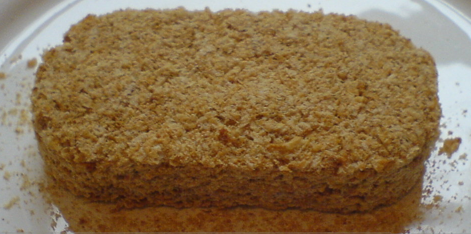
Desiccation, thy name is Oatibix!

I have discovered the driest substance in the known universe.

Just one Oatibix, weighing less than 24g, will soak up seventeen gallons of liquid without any loss of dryness at the core. My team's careful analysis has revealed a chance distribution of oaty complexes, each clustered around a central atom of praseodymium-141, creating a six-dimensional vortex that traps water molecules and spins them off in a fine hyperconical stream directly towards the Beyond.

I have filed a patent and look forward to a lucrative contract with NASA to test and develop their manifold potential uses. In the meantime, I'm crossing my fingers that it's safe to use them to line the shed.

And if you were to eat one dry - let me not think on't. All that they'd find of you would be a fine powder, with small patches of beige sludge.
And perhaps your teeth.

Hard to be precise at this stage, as I say, without further research.